What happens when a female frontwoman outgrows the version of herself the public romanticizes? Does that girl still live within her, waiting to be clawed back out through anniversary albums, reunion tours, and carefully packaged nostalgia?
Women in alternative music are often expected to remain emotionally frozen in youth. Unchanged by time, untouched by growth, and unwavering in whatever identity audiences decided belonged to them years ago. The same audience that once praised emotional vulnerability can quickly reject evolution the moment it no longer resembles the version they first connected to.
The Architecture of a Teen Idol
What does it mean to revisit music that raised you?
It can look like many things. Fondness for a memory. Disdain for a difficult chapter of your life. Sometimes, it feels like relief. Like finally exhaling after holding your breath too long. Regardless, nostalgia provokes something visceral within us. Music, more than almost any other art form, has the ability to preserve versions of ourselves we no longer recognize.
The same can be said for music passed down almost like an heirloom, traveling from one set of hands to another. Few artists embody that phenomenon quite like Hayley Williams.
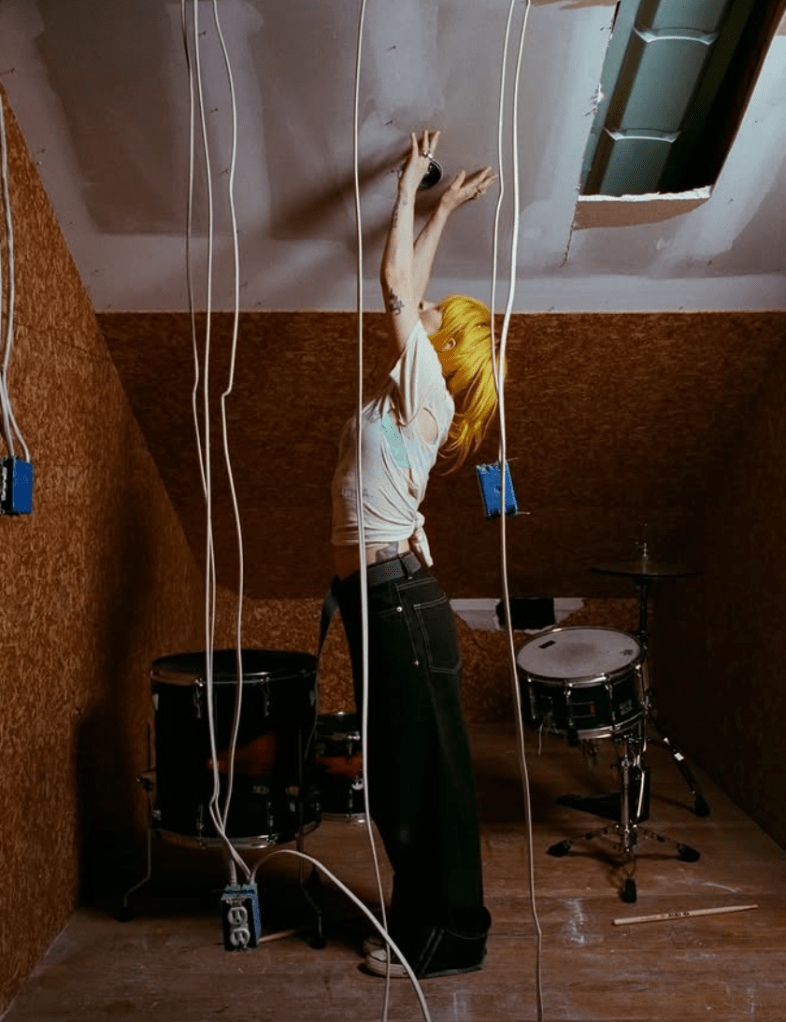
The Good ‘Dye’ Young
As the frontwoman of Paramore, Hayley Williams entered the music industry at only sixteen years old. Signed to Fueled by Ramen and Atlantic Records shortly after, she grew up in front of an audience that never really stopped watching. For many young women especially, Paramore became more than a band. It became the soundtrack to awkward adolescence, bedroom mirror concerts, and the overwhelming feeling of wanting desperately to be understood.
That emotional connection has followed Williams throughout every stage of her career. From the orange hair and eyeliner tied to early 2000s pop punk culture to the softer nature of her solo work, audiences have documented each reinvention in real time. Beyond music, her role as cofounder and CEO of Good Dye Young feels rooted in the same individuality that first defined her image, now presented through a more evolved lens. Yet female artists are rarely afforded the same freedom to grow without scrutiny. Growth is often mistaken for abandonment, while maturity becomes interpreted as distance.
Reinvention Under Observation: Beyond Riot!
With the announcement of her upcoming solo tour, conversations surrounding Williams have once again become rooted in nostalgia. Social media timelines immediately filled with memories, old photographs, and discussions about the impact Paramore had on an entire generation. However, beneath that nostalgia sits something deeper. Watching Hayley Williams continue forward forces audiences to confront the passage of their own lives as well.
Perhaps that is why frontwomen occupy such a unique place within music culture. They are expected to serve simultaneously as symbols of rebellion, vulnerability, femininity, and permanence. Yet no woman can remain a “teen idol” forever. Eventually, the audience must decide whether they love the artist or simply the memory attached to her.
Hayley Williams choosing to continue evolving anyway may be the most punk thing about her at all.

 Anyway! Magazine
Leave a comment